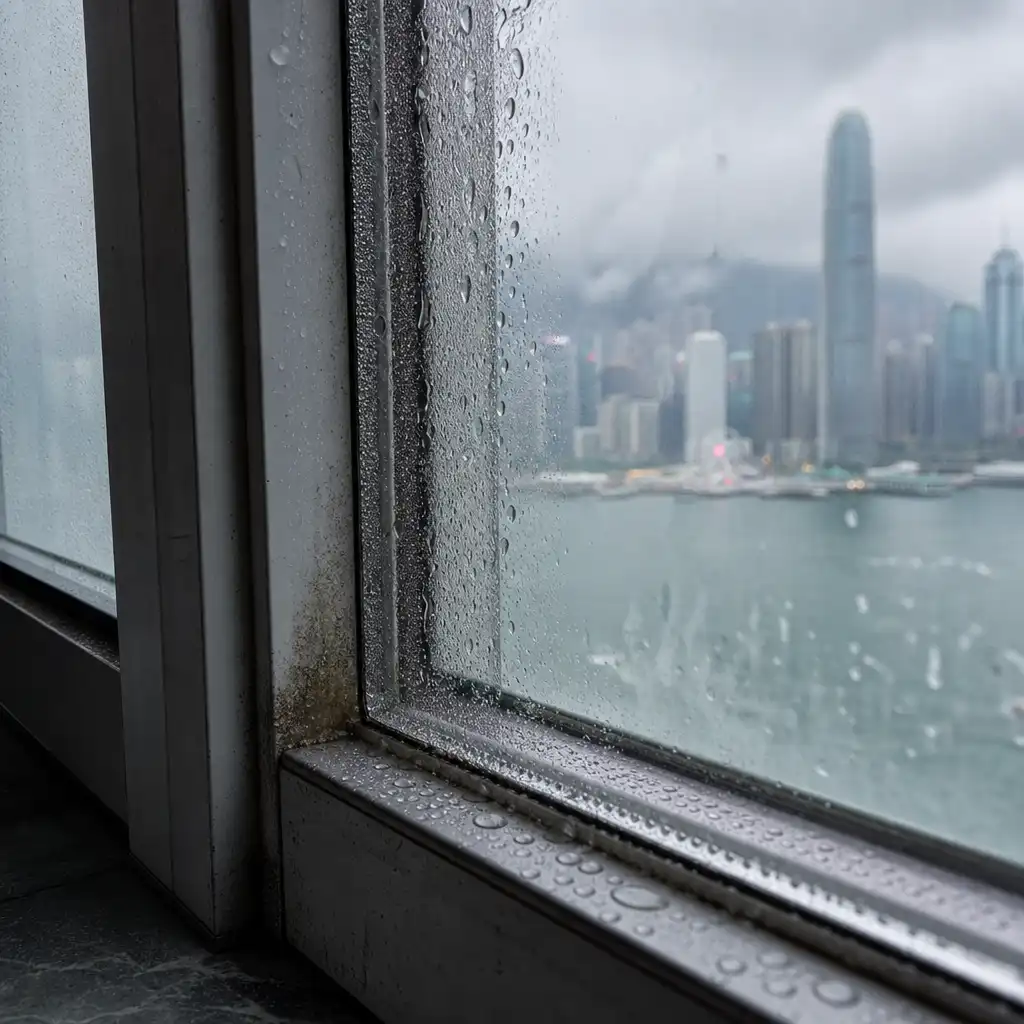
In Hong Kong, the number of window leakage complaints during the annual rainy season is alarming. According to statistics from the Hong Kong Buildings Department, aluminum window-related water seepage complaints account for over 30% of all building seepage cases, with the vast majority stemming from aging waterproofing layers and deteriorated sealant. For residential property owners with buildings over ten years old, aluminum window waterproofing works are not an optional item but a necessary investment to protect the structural integrity of the property. This article, written by EJW’s engineering team from a practical perspective, provides a detailed analysis of the complete scaffold-based leak prevention process, helping you clearly understand the function and cost-effectiveness of each stage.
Table of Contents
- Key Takeaways
- Why Aluminum Windows Leak: The Unique Challenges of Hong Kong’s Climate
- Complete Process of Scaffold Leak Prevention Works
- Waterproofing Material Selection: Comparison of Silicone, PU Injection, and Elastic Waterproof Coating
- Relationship Between Mandatory Window Inspection Scheme and Waterproofing Works
- Waterproofing Works Cost and Construction Schedule
- Common Owner Mistakes: Why DIY Solutions Often Worsen the Problem
- Frequently Asked Questions
Key Takeaways
| Key Insights | Detailed Explanation |
|---|---|
| Scaffolding is a prerequisite for high-rise waterproofing works | For aluminum window waterproofing repairs above the third floor, scaffolding must be erected to ensure worker safety and proper material application. Suspended rope access cannot guarantee construction quality. |
| Sealant lifespan is approximately 7 to 10 years | Hong Kong’s high-temperature and humid environment accelerates silicone aging. Units over ten years old almost certainly require re-sealing. Delaying will only expand the seepage area. |
| Leakage does not necessarily require full window replacement | More than 60% of aluminum window leakage cases only require re-waterproofing and replacement of accessories. EJW’s inspection report will clearly distinguish necessary repairs from non-essential items. |
| Window sill seepage and window frame leakage have different causes | Window sill seepage is mostly caused by cracks in external wall plaster, while window frame leakage is usually due to aged sealant or deformed hinges. The treatment methods are completely different. |
| PU injection is suitable for severe seepage cracks | For seepage caused by structural cracks, PU foam injection provides far superior water-stopping effect compared to surface repair, but must be performed by licensed personnel. |
| Mandatory window inspection covers waterproofing condition | According to the Buildings Ordinance Cap. 123, mandatory window inspection reports must include assessment of window sealing condition. Any waterproofing issues found must be repaired within the deadline. |
| Waterproofing works require observation for at least one full rainy season | After completing waterproofing treatment, owners are advised to inspect regularly during the next rainy season to confirm no new seepage points. Any issues should be reported to the contractor within the warranty period. |
Why Aluminum Windows Leak: The Unique Challenges of Hong Kong’s Climate
Hong Kong’s climatic conditions pose a severe test to the waterproofing performance of aluminum windows. During the rainy season from April to September each year, continuous heavy rain combined with strong monsoon winds causes rainwater to impact windows at nearly horizontal angles. Ordinary building designs simply cannot fully withstand this penetration pressure. Actual engineering data shows that Hong Kong’s average annual rainfall exceeds 2,400 millimeters, with 60% concentrated in the six months of the rainy season, placing extreme stress on any waterproofing material.
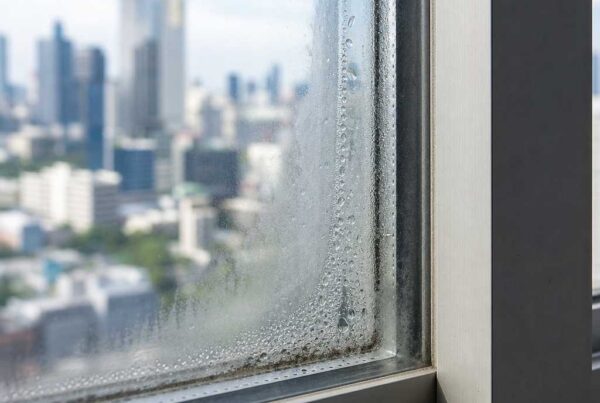
The material characteristics of aluminum windows are also a root cause of the problem. Aluminum itself has high thermal conductivity. During Hong Kong’s hot summers, it expands when absorbing heat during the day and contracts at night. This daily thermal expansion and contraction cycle gradually tears the sealant layer between the window frame and the wall. For aluminum windows over fifteen years old, the sealant has almost certainly lost its elasticity. Pressing lightly with a finger can reveal that the sealant has hardened or developed cracks.
Another often overlooked factor is the external wall plaster around the windows. In many older Hong Kong residential buildings, the external wall plaster has developed fine cracks. Rainwater seeps into the plaster layer and flows along structural joints toward the window frame, causing owners to mistakenly believe the problem originates from the window itself. In EJW’s actual inspection cases, approximately 20% of complaints that appear to be window frame leakage are actually caused by external wall seepage. Simply treating the window frame cannot solve the problem. This is why professional waterproofing works must begin with a comprehensive inspection rather than proceeding directly to sealing.
Complete Process of Scaffold Leak Prevention Works
Scaffold leak prevention works are not simply a matter of erecting scaffolding and then applying sealant. A professional engineering process is divided into five distinct stages, each with non-negotiable technical requirements.
First Stage: Site Inspection and Leakage Source Tracing
After arriving on site, the engineer’s primary task is to identify the water intrusion points. Common practical methods include water testing (simulating heavy rain by directing water through hoses around the window) and infrared thermal imaging scanning (detecting moisture distribution within the wall). This stage usually takes one to two hours but directly determines whether the subsequent works will be on the right track. Skipping this step and proceeding directly to construction is the most common form of cutting corners in the industry.
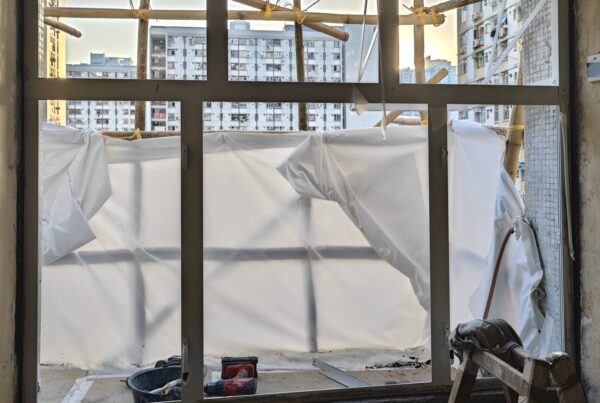
Second Stage: Scaffold Erection and Safety Setup
For units above the third floor, scaffold erection must comply with the safety regulations of the Hong Kong Labour Department. The scaffold must be securely fixed to the external wall and equipped with safety nets to prevent tools or materials from falling. The scaffold erection process itself requires one to two working days, and this cost is an unavoidable necessary expense. Some low-cost contractors use “swing stages” or rope suspension as substitutes, but such practices are non-compliant in Hong Kong and severely affect construction quality, as workers cannot apply stable force for precise sealing work.
Third Stage: Removal of Old Waterproofing Layer and Substrate Preparation
All existing sealant and aged waterproof coatings must be completely removed to expose a clean substrate surface. This step requires professional cutting tools and ensures the substrate is completely dry before new waterproofing materials can adhere effectively. Inadequate substrate preparation is the primary cause of waterproofing failure. Actual cases show that reapplying sealant on damp or residue-contaminated surfaces causes the new sealant to detach within as little as three months.
Fourth Stage: Application of Waterproofing Materials
Based on the leakage causes identified in the inspection report, construction personnel will select appropriate waterproofing materials. Window frame joints typically use high-elasticity silicone sealant, structural cracks use PU foam injection, and large external wall areas require elastic waterproof coating with fiberglass mesh reinforcement. Each material has specific temperature and humidity requirements during application. Applying in rainy or high-humidity conditions will directly compromise the results.
Fifth Stage: Completion Testing and Documentation
After professional works are completed, a water spray test must be conducted to verify the treatment effectiveness. EJW’s engineering process includes issuing a computer-generated inspection report that records the scope of works, materials used, and test results in detail. This report can also serve as supporting documentation for the Mandatory Window Inspection Scheme.
Waterproofing Material Selection: Comparison of Silicone, PU Injection, and Elastic Waterproof Coating
There are many types of materials available on the market for aluminum window waterproofing, but not every material is suitable for every seepage situation. Choosing the wrong material not only wastes money but may cause the leakage problem to reappear in the next rainy season or even worsen. The following comparison table is based on EJW engineering team’s actual construction experience and is not promotional data from product manufacturers.
| Waterproofing Material | Most Suitable Applications | Expected Service Life |
|---|---|---|
| High-Elasticity Neutral Silicone Sealant | Sealing window frame-to-wall joints and window corners, suitable for joints with slight movement | 10 to 15 years (depending on brand and application quality) |
| PU Polyurethane Foam Injection | Structural cracks and concrete voids, suitable for deep cracks with water pressure | 15 to 20 years, provided the cracks are stable and no longer expanding |
| Elastic Waterproof Coating (with Fiberglass Mesh) | Large-area external wall waterproofing and horizontal window sill surfaces, suitable for areas requiring overall protection | 8 to 12 years, requires regular inspection for blistering or peeling |
Tip: Use neutral silicone sealant instead of acidic silicone, as the acetic acid released during curing of acidic silicone will corrode the anodized layer of aluminum window frames, eventually causing spotting and structural weakening. Most cheap sealants available in hardware stores are acidic. You can identify them by the vinegar smell when opening the tube.
In actual projects, a complete aluminum window waterproofing treatment often requires the simultaneous use of two to three different materials to address specific issues at different locations. Using a single material to treat all areas is a common indicator of corner-cutting in the industry.
“True waterproofing works involve systematic sealing of the water source, not simply applying a circle of white silicone around the window frame. If only surface treatment is done without locating the water intrusion point, even the best materials will not withstand a typhoon season.” – EJW Engineering Team Construction Guidelines
Relationship Between Mandatory Window Inspection Scheme and Waterproofing Works
According to the Buildings Ordinance Cap. 123, owners of private buildings over ten years old in Hong Kong must arrange for Registered Inspectors or contractors recognized by the Buildings Department to conduct mandatory inspection of external walls and windows. Many owners are unaware that the scope of the Mandatory Window Inspection Scheme explicitly includes the sealing and waterproofing condition of windows. If waterproofing issues are identified in the inspection report, owners must complete the repairs within the stipulated deadline and submit completion proof, or face fixed penalties and potential costs from contractors appointed by the Buildings Department.
From a cost perspective, proactively carrying out waterproofing repairs before receiving a Mandatory Window Inspection notice is actually more cost-effective than waiting passively. There are two main reasons: first, proactive repair allows owners to choose competitive contractors rather than being forced to accept quotations from the Buildings Department’s approved list; second, the waterproofing report from proactive works can be directly used as compliance documentation for the inspection, saving repeated expenses.
EJW’s service is specifically designed to meet this practical need. The company provides computer-generated inspection reports, and waterproofing works can be carried out together with inspection services. Owners do not need to engage two separate companies, reducing coordination time and additional costs. The entire process is documented by registered personnel to ensure the documents will not have format issues or insufficient information during Buildings Department review.
Tip: After receiving a Mandatory Window Inspection notice, do not only address visibly obvious problems. It is recommended to engage a qualified contractor for a comprehensive inspection, as handling all issues in a single scaffolding setup is far more economical than multiple sessions, since scaffolding costs often account for 20-30% of the total project cost.
Waterproofing Works Cost and Construction Schedule
The cost of aluminum window waterproofing works varies significantly depending on floor level, scope of works, and material selection. Owners should be cautious of unreasonably low quotations in the market. The following figures are based on actual Hong Kong market levels for reference.
Scaffolding Cost: An Unavoidable Fixed Expense
For units from the third to tenth floor, the cost of erecting standard scaffolding is approximately HK$8,000 to HK$15,000 per setup. For floors above ten, costs increase due to higher difficulty and material usage. Some owners request scaffolding-free methods to save costs, but for precision waterproofing works, such approaches cannot guarantee quality and ultimately result in wasted labor and materials.
Waterproofing Treatment Cost: Depends on Severity
For general residential units, re-sealing and waterproofing treatment costs approximately HK$3,000 to HK$8,000 (excluding scaffolding). If PU injection or large-area elastic waterproof coating is required, costs may rise to HK$15,000 or more. EJW’s principle is to charge only for necessary repair items. The engineer will clearly distinguish critical safety issues from recommended improvements in the report, allowing owners to decide whether to proceed with the suggested items.
Construction Schedule Reference
A standard aluminum window waterproofing project (including scaffolding) typically takes 3 to 5 working days, including one day for scaffold erection, one to two days for actual works, one day for curing and final testing, and one day for scaffold dismantling. Owners should arrange for someone to be present or authorize access for internal inspection during the works.
Common Owner Mistakes: Why DIY Solutions Often Worsen the Problem
After every rainy season, EJW’s engineering team receives numerous “secondary repair” enquiries. These cases share the common feature that owners or previous contractors used incorrect methods to handle leakage, causing the problem to recur or even worsen in a short time. The following mistakes appear in almost every such case.
Mistake 1: Applying Sealant Directly on Wet Surfaces
Applying sealant immediately after discovering a leak is the most common mistake. Sealant requires a completely dry substrate to adhere effectively. Applying on a wet surface creates a vapor barrier between the sealant and substrate, causing detachment within weeks. The correct approach is to allow the substrate to dry thoroughly (usually one to three days depending on weather) before cleaning and sealing.
Mistake 2: Using Low-Quality or Incorrect Types of Sealant
Cheap all-purpose sealants from hardware stores are not designed for external wall use. Their weather resistance and elasticity are far inferior to professional-grade exterior silicone sealants. Some owners even use indoor white sealants for external problems. Such products will turn yellow and lose elasticity within one to two months under Hong Kong’s ultraviolet exposure.
Mistake 3: Only Treating Visible Indoor Seepage Points
The location where water stains appear on indoor walls is often not the actual water intrusion point. Moisture can travel horizontally along gaps within the wall structure, sometimes over a distance of more than one meter. Only repairing visible indoor water stains cannot solve the problem. On the contrary, it may trap water inside the wall, accelerating structural damage.
In practice, the correct logic for handling aluminum window leakage is: first locate the water source from outside, systematically seal from exterior to interior, and only then address indoor repairs. Any reversal of this sequence will only provide temporary results.
Frequently Asked Questions
Is scaffolding always necessary for aluminum window waterproofing works?
For units on the third floor or above, scaffolding is a necessary condition for safe and effective external wall waterproofing works. For second floor and below, external lifts or ladders may sometimes be used as alternatives, but the working range and safety protection are relatively limited. Some contractors use “no scaffolding” as a selling point, but in reality they use rope suspension, which violates Hong Kong labour safety regulations and cannot guarantee quality. Owners should avoid such options.
How long is the warranty after waterproofing works?
Aluminum window waterproofing works using quality materials and proper professional application can usually maintain waterproofing effectiveness for over ten years. EJW provides written warranty with the works. The specific period depends on the type of works and materials used. During the warranty period, if seepage occurs at the same location, the company will arrange free inspection and repair.
If the window is already leaking, is full window replacement necessary?
Not necessarily. More than 60% of aluminum window leakage cases only require waterproofing treatment and replacement of aged components, without needing full window replacement. Full window replacement usually costs three to five times more than waterproofing repair. Owners should request a written report clearly explaining why full replacement is needed, rather than relying on verbal suggestions. EJW’s computer-generated report will list specific issues and recommended solutions for each window, enabling owners to make informed decisions.
Can the Mandatory Window Inspection and waterproofing works be completed in one go?
Yes. EJW’s service integrates Mandatory Window Inspection and waterproofing repair into the same scaffolding session, avoiding repeated scaffolding costs. The inspection report is issued by Buildings Department recognized personnel and can be submitted directly as compliance proof, while also covering the completion record of the waterproofing works.
Do aluminum window waterproofing works require notification to the building management or approval?
Scaffold works usually require advance notification to the building management office. Some estates require written approval from the Owners’ Corporation or management company. EJW’s engineering team will assist owners with the relevant notification procedures before construction and ensure the scaffolding complies with public safety requirements. For village houses or detached houses, owners should also confirm that scaffolding does not occupy public areas, otherwise a temporary occupation permit must be applied from the relevant government department.
Is the typhoon season suitable for waterproofing works?
During the typhoon season (May to November), Hong Kong’s weather is highly variable, limiting the construction window for waterproofing works. It is generally recommended to carry out works before April or after November during drier seasons, when substrate drying is faster and material curing conditions are more ideal. However, if leakage has already affected living safety or indoor structure, emergency repair should be arranged immediately rather than delayed for drier weather.
References
- Hong Kong Buildings Department Official Website: Mandatory Window Inspection Scheme and Buildings Ordinance
- Hong Kong Labour Department: Safety Regulations for Scaffold Erection on Construction Sites
- Construction Industry Council: Industry Standards and Registered Contractors for Waterproofing Works
- Hong Kong Government One-stop Portal: Building Seepage Complaint Handling Mechanism