Many Hong Kong residential owners facing mandatory window inspection notices encounter the same challenging issue: whether the existing anti-theft window grilles need to be removed. Can they be reinstalled in their original positions afterwards? This question appears simple but involves multiple technical details, including window frame structure, grille fixing methods, and engineering sequence. Improper handling can damage the existing grilles and may cause structural issues in the aluminum window works. This article breaks down the practical engineering procedures to safely complete aluminum window replacement while retaining the grilles, helping owners make informed decisions.
Table of Contents
- Key Takeaways
- Understanding the Structural Relationship Between Anti-Theft Grilles and Aluminum Windows
- Responsibilities for Grille Handling Under Mandatory Window Inspection
- Steps for Aluminum Window Replacement While Retaining Grilles
- Comparison of Three Common Solutions
- Precautions for Reinstalling Anti-Theft Grilles
- Frequently Asked Questions
Key Takeaways
| Key Points | Details |
|---|---|
| Grille fixing method determines engineering difficulty | Expansion bolt-fixed grilles are easier to remove and reinstall without damage compared to welded grilles |
| Grille removal must precede window replacement | In all cases, anti-theft grilles must be removed first before safely dismantling old aluminum window frames; otherwise, both the frames and grilles may be damaged |
| Grille dimensions must match new window frames | If the new aluminum window frame thickness or dimensions change, the original grilles may not fit back in the original positions—advance measurement is essential |
| Old iron grilles require special assessment | Aged iron grilles with rust or deteriorated welding points carry high risks during forced removal and reinstallation and should be evaluated by professionals |
| Escape route grilles must comply with fire safety requirements | According to Hong Kong Fire Services regulations, grilles at escape window positions must have emergency opening devices and must be re-verified for compliance during replacement |
| Quotations must cover grille handling costs | Some contractors’ quotations exclude grille removal and reinstallation—owners should confirm inclusion at the quotation stage |
| EJW professional assessment clarifies project scope | On-site evaluation by Buildings Department recognised personnel accurately determines the feasibility of retaining grilles and required engineering coordination |
Understanding the Structural Relationship Between Anti-Theft Grilles and Aluminum Windows
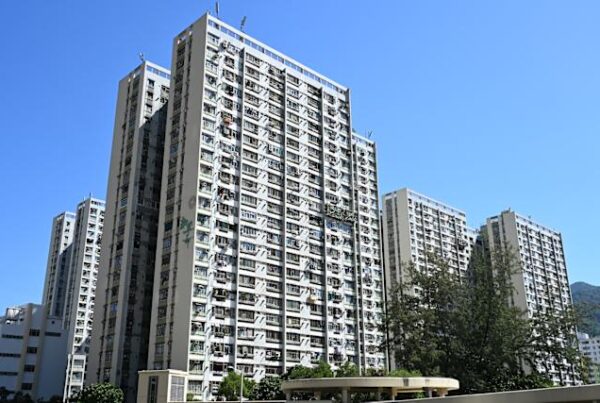
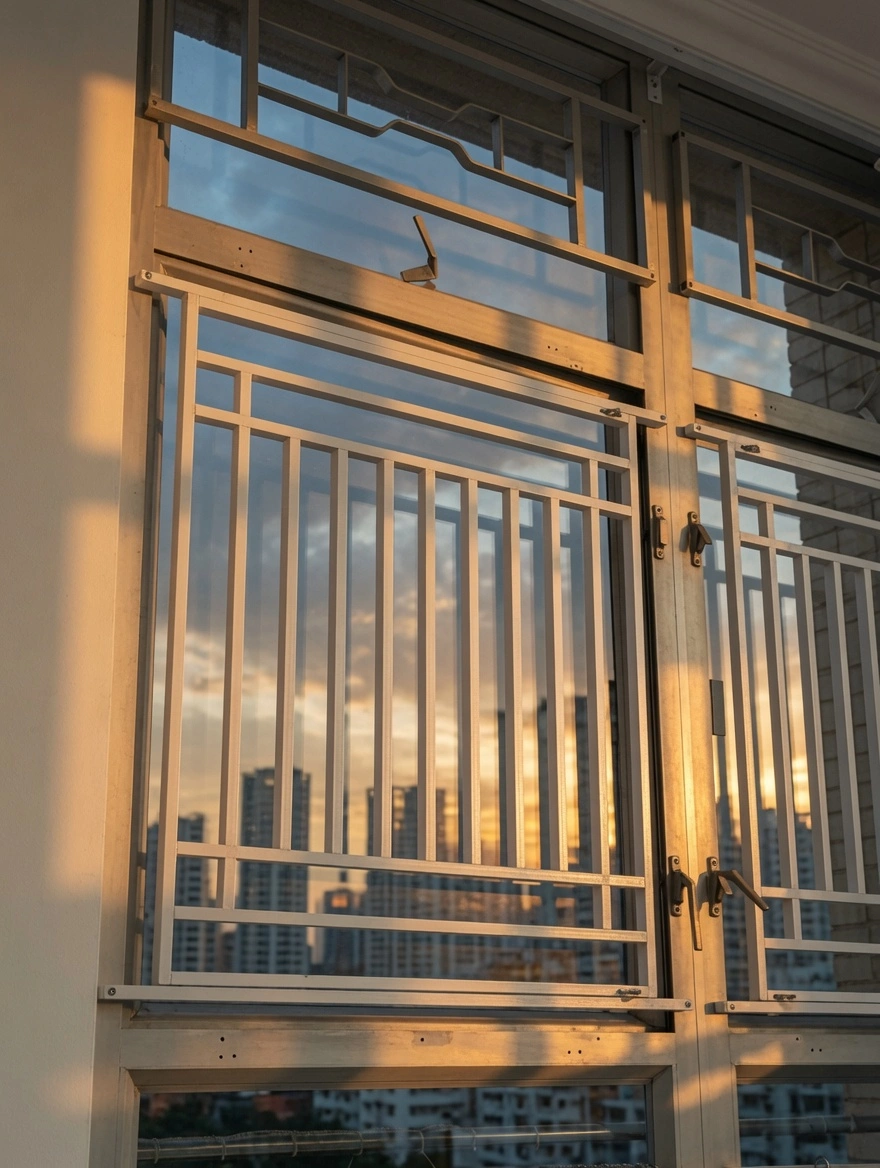
Anti-theft window grilles are extremely common in older Hong Kong residential buildings, especially in private buildings and public housing estates over 20 years old. From an engineering perspective, grilles are not independent installations. They are typically fixed to the wall or window sill surrounding the window frame, creating a close spatial relationship with the aluminum window frame. Understanding this structural relationship is the first step in determining whether grilles can be retained.
Grille fixing methods generally fall into two categories: direct welding to the outer edge of aluminum or iron window frames, or fixing to the wall or concrete sill via expansion bolts. The former is technically integrated with the window frame; removal almost inevitably requires cutting weld points, which can easily damage the grille structure or leave obvious marks. The latter is more flexible—grilles can theoretically be completely removed and reinstalled if screws are carefully extracted.
In actual projects, many owners are unaware of their grille fixing method until engineers conduct an on-site assessment. A common mistake is owners removing visible screws only to find the grilles still fixed, due to hidden welding points. Therefore, professional personnel must perform an on-site inspection of the grille fixing structure before commencing any aluminum window works, rather than relying on appearance alone.
Different Grille Materials and Removal/Reinstallation Difficulty
Aluminum alloy grilles are a more modern option—they are lightweight and rust-resistant, making removal and reinstallation relatively easy. Older iron grilles present more issues, as years of oxidation cause screws and fixing points to corrode, increasing the risk of structural breakage during forced removal. If grilles already show obvious rust, even successful removal may raise doubts about stability after reinstallation.
Stainless steel grilles fall between the two in terms of difficulty. They offer strong corrosion resistance, but welding points are often harder to handle than aluminum alloy. In practice, when encountering stainless steel welded grilles, we usually recommend owners first consider the remaining service life of the existing grilles before deciding whether the extra effort to retain them is worthwhile.
Responsibilities for Grille Handling Under Mandatory Window Inspection
Under the Buildings Ordinance (Cap. 123) in Hong Kong, the Buildings Department may issue mandatory window inspection orders for private buildings aged 10 years or above, requiring owners to appoint qualified persons to inspect and repair windows. Within this statutory framework, the responsibility for handling anti-theft grilles rests entirely with the owner. Inspection companies or contractors are typically responsible only for the structural aspects of the windows themselves in the contract.
This means that after receiving a window inspection notice, owners must proactively inform contractors about the presence of anti-theft grilles and explicitly request that grille removal and reinstallation be included in the quotation. If overlooked, contractors may only replace aluminum window components without handling the grilles, ultimately resulting in the grilles being unable to be properly refixed after new windows are installed.
When handling mandatory window inspection cases, EJW engineers include recording the type, fixing method, and condition of existing grilles during on-site assessment as a key step. This information is incorporated into computer-generated inspection reports to ensure clear project scope and avoid future disputes. This responsible practice is not yet a universal industry standard but represents best practice.
Common Owner Question: Who Bears the Cost of Grille Removal and Reinstallation?
The direct answer is that grille removal and reinstallation costs are usually paid by the owner as an additional item, since this constitutes supplementary works outside the core window replacement scope. Costs depend on grille size, quantity, and fixing method, generally ranging from several hundred to over a thousand Hong Kong dollars per window.
Some owners choose to remove grilles themselves to save costs, have the contractor replace the aluminum windows, and then reinstall the grilles afterwards. While not entirely unfeasible, this carries risks as owners may not fully understand correct fixing requirements, potentially compromising safety and stability. Given the security and fall-prevention functions of grilles, sacrificing installation quality purely for cost savings is not recommended.
Steps for Aluminum Window Replacement While Retaining Grilles
In actual engineering operations, the procedure for aluminum window replacement while retaining anti-theft grilles differs significantly from standard replacement. Correct sequencing effectively minimises damage to grilles while ensuring new window installation quality. Below is the actual sequence we follow in projects.
Step 1: Pre-Project Measurement and Documentation
Before removing anything, engineers must measure the outer dimensions of existing aluminum window frames and record the relative positions between grille fixing points and the frames. These data are critical, as new aluminum window frame dimensions or outer frame thickness may differ slightly. Without prior records, fixing point misalignment may occur during reinstallation.
Engineers should also photograph the grille fixing methods for reference, especially the positions, quantity, and specifications of fixing screws. These photos serve as a reference during reinstallation to avoid missing any fixing points.
Step 2: Careful Grille Removal
Grille removal must follow the correct sequence—usually starting from the top fixing points, then the sides, and finally the bottom. This prevents the grille from suddenly shifting under gravity, which could injure workers or deform the grille. For heavier iron grilles, at least two workers are required, with support padding placed underneath.
Removed grilles should be stored safely away from potential damage. We recommend wrapping them in old blankets or cloths to prevent scratches or bending during handling. All fixing screws and accessories must be collected and stored completely to avoid loss, which would require purchasing replacements and increase unnecessary costs.
Step 3: Aluminum Window Frame Replacement
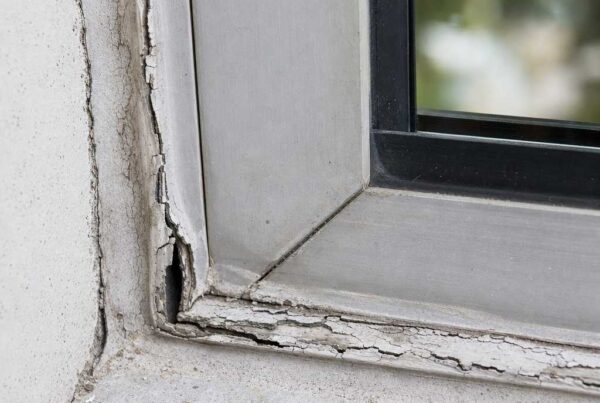
Only after grilles are removed can the old aluminum window frames be dismantled and new frames installed. This step follows standard aluminum window procedures, including removal of old sealant, installation of new frames, injection of new sealant, and waterproof testing. Importantly, engineers must pay close attention to the new frame’s outer position during this stage to ensure sufficient space for correct grille reinstallation angles.
If the new aluminum window outer frame is thicker or positioned slightly differently, the need to adjust wall fixing holes must be assessed immediately rather than discovered during grille reinstallation. Prevention is always more efficient than rectification.
Step 4: Grille Reinstallation After New Window Completion
Grille reinstallation can only proceed after new aluminum window installation and sealing are fully completed. Never install grilles before the new sealant has fully cured, as the weight and vibration during installation may compromise the seal. Generally, new sealant requires at least 24 hours of curing time; in Hong Kong’s humid weather, 48 hours is recommended.
“The refixing strength of anti-theft window grilles must meet the original installation standard. Any reduction in screw quantity or use of smaller screws is an unacceptable safety risk.” — EJW Engineering Department
Comparison of Three Common Solutions
When facing coordination issues between anti-theft grilles and aluminum window works, owners generally have three options. Each has different costs, risks, and suitability. The comparison table below helps owners decide based on their situation.
| Solution | Applicable Situations & Advantages | Main Risks & Limitations |
|---|---|---|
| Professional contractor handles both grille removal/reinstallation and aluminum window replacement | Best workflow coordination, clear responsibility allocation, ensures grille reinstallation meets safety standards—suitable for most owners | Higher total cost; must ensure quotation includes grille works, otherwise extra charges may arise |
| Owner handles grille removal/reinstallation; contractor handles only aluminum windows | Can save partial costs; owner has direct control over grille condition—suitable for expansion bolt-fixed grilles where owners have basic DIY capability | Reinstallation strength and safety difficult to guarantee; full liability for any fall incidents rests with the owner—not recommended for general owners |
| Replace with new-style grilles during window replacement | Allows selection of new grilles compliant with current fire escape requirements; updated overall appearance—most comprehensive long-term solution | Highest cost; may require additional approvals; longer lead time for custom-sized new grilles |
In actual cases involving buildings over 30 years old, we recommend owners seriously consider the third option. This is because old iron grilles over 30 years old, even if successfully removed and reinstalled, often have compromised structural integrity. Retaining them merely postpones potential problems. Complete replacement is often the more cost-effective choice in the long run.
Tip: When requesting quotations, clearly ask contractors to list aluminum window works and grille removal/reinstallation costs as separate items. This facilitates comparison across contractors and prevents grille costs from being vaguely bundled into the total price.
Precautions for Reinstalling Anti-Theft Grilles
Although grille reinstallation appears to be the reverse of removal, several critical details require special attention. These details are often overlooked in the industry but cannot be ignored from a safety engineering perspective.
Requirements for Reinserting Expansion Bolts
If original grille fixing holes are damaged or shifted during window replacement, new expansion bolts must be reinserted. Use bolts of the same or higher specification as the originals, ensuring insertion depth meets manufacturer requirements. In Hong Kong’s older buildings, concrete wall quality varies; where wall strength is insufficient, increase the number of fixing points rather than relying on higher-spec bolts.
A frequently overlooked issue is that new sealant after window replacement may cover some original fixing hole positions. Engineers must wait until the sealant has fully cured before drilling new holes at the correct locations. Never force installation while sealant is still wet for the sake of speed.
Compliance Requirements for Grilles at Escape Window Positions
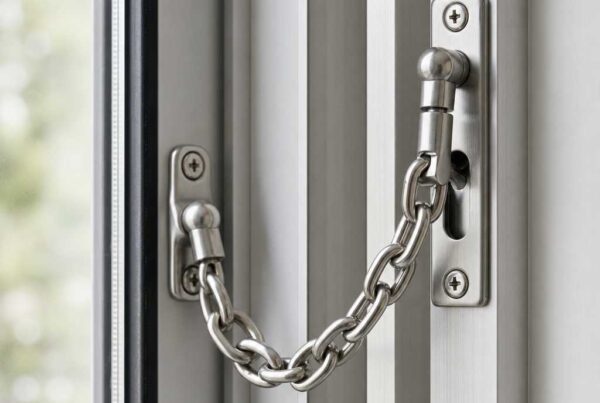
According to Hong Kong Fire Services Department regulations, grilles at windows serving as escape routes must include quick-opening emergency devices operable from inside. During reinstallation, functionality of these devices must be verified. If damaged during removal, they must be replaced—mere “basic open/close function” is not an acceptable standard.
Tip: After reinstallation, test the stability of every fixing point by gripping the vertical bars of the grille and applying lateral and longitudinal force for about 30 seconds to confirm no loosening or shifting occurs. This quick test can effectively identify unstable screws.
Waterproofing Integration Issues
Grille fixing screw holes are potential water ingress points, especially those facing external walls. After reinstallation, waterproof sealant must be applied around all outdoor-facing fixing points to prevent rainwater from seeping into the wall along the screw holes. This detail may not be obvious in dry weather but often surfaces after typhoon seasons, when repair costs far exceed preventive sealing expenses.
Hong Kong’s annual typhoon season, with strong winds and heavy rain, poses a severe test for aluminum window and grille installation quality. According to Hong Kong Observatory historical data, the territory is affected by five to six tropical cyclones on average each year, some with sustained winds exceeding 100 km/h. This climatic characteristic demands stricter window installation standards in Hong Kong than in temperate regions.
Frequently Asked Questions
Is it necessary to remove anti-theft grilles when replacing aluminum windows?
Yes, in the vast majority of cases, anti-theft grilles must be removed before replacing aluminum windows. This is because window frame dismantling requires operations around the outer frame perimeter. If grilles remain in place, workers cannot work safely or ensure proper new frame installation quality. The only exception is when grilles are fixed sufficiently far from the window frame with adequate working space—a rare situation in typical Hong Kong residential settings.
If old grilles show severe rust after removal, are they still worth keeping?
This depends on the severity and location of rust. Light surface rust can be sanded and repainted for continued use. However, if rust has penetrated the metal cross-section, especially at fixing joints and main structural members, the grilles should not be retained, as they may suddenly fail under typhoon or impact loads, posing serious falling risks. Professional assessment is recommended rather than relying on visual judgment alone.
What is the approximate cost of grille reinstallation after window replacement?
Costs vary significantly depending on grille size, material, and fixing method. Standard-sized aluminum alloy grilles typically cost HKD 300–800 per window for removal and reinstallation. Iron or stainless steel welded grilles are more expensive, ranging from HKD 1,000 to 2,000 or more per window due to higher difficulty. Additional costs apply for re-drilling holes or replacing waterproof sealant. Owners should clearly describe the grille condition when requesting aluminum window quotations to obtain comprehensive pricing covering all related works.
Does EJW’s mandatory window inspection service include grille assessment?
Yes. EJW’s Buildings Department recognised personnel record the condition of anti-theft grilles—including fixing method, material, and structural integrity—during mandatory window inspections. This information is reflected in the computer-generated inspection report. It allows owners to understand basic grille status before deciding on repair options, avoiding surprises once works commence. Contact EJW directly to arrange an assessment.
If the grilles in my unit were installed by tenants, does the owner still bear responsibility for grille handling during mandatory inspection?
Under Hong Kong’s legal framework, statutory responsibility for mandatory window inspection lies with the property owner, regardless of tenancy arrangements. Even if grilles were installed by tenants, owners must ensure overall window compliance when facing an inspection order, including proper handling of grilles in relation to aluminum window works. It is advisable to include relevant clauses in tenancy agreements to clearly define tenant responsibilities for additional installations and maintenance, thereby protecting the owner’s legal rights.
How long does the complete grille retention window replacement project take?
For a typical unit, aluminum window replacement together with grille removal and reinstallation usually takes one to two working days, depending on the number of windows and grille complexity. If re-drilling for expansion bolts or extended curing time for sealant is required, the project may extend to three days. Owners should allow sufficient time and avoid expecting all works to be completed in a single day, as rushed work often compromises installation quality.
References
- Buildings Department Official Website: Statutory requirements and related building ordinances for the Mandatory Window Inspection Scheme
- Hong Kong Fire Services Department Official Website: Residential escape facilities and window grille safety regulations
- Hong Kong Observatory Official Website: Historical typhoon data and tropical cyclone statistics for Hong Kong
- Food and Environmental Hygiene Department Official Website: Building maintenance related regulations and owner responsibility guidelines
- Hong Kong Housing Authority Official Website: Public housing estate window maintenance and replacement policies