Every year, the Housing Department and the Buildings Department issue iron window inspection notices to public housing owners or tenants across Hong Kong. However, most owners’ first reaction upon receiving the letter is confusion or even ignoring it. In fact, the consequences of disregarding the notice or handling it improperly are far more serious than imagined. According to the Buildings Ordinance (Cap. 123) and the Housing Department’s safety guidelines, failure to complete window inspection and necessary remedial works within the deadline may result in follow-up actions, fines, impact on tenancy rights, or liability for safety issues.
This article, based on practical experience, provides a step-by-step guide for public housing owners on what to do after receiving the notice, enabling you to achieve full compliance within the statutory deadline while avoiding overcharging traps.
Table of Contents
- Quick Key Highlights
- What is the Public Housing Iron Window Inspection Notice? Legal Background
- First Steps After Receiving the Notice: Do Not Delay
- How to Choose Qualified Persons for Iron Window Inspection and Aluminum Window Replacement
- Detailed Iron Window Inspection and Aluminum Window Replacement Procedure: From Inspection to Project Completion
- Costs and Common Charging Pitfalls
- Comparison of Different Approaches
- Frequently Asked Questions
- References
Quick Key Highlights
| Key Points | Description |
|---|---|
| Target Recipients | Owners or tenants of public housing units with old-style iron windows. Notices are issued by the Housing Department/Buildings Department via random inspection or safety complaints, not every household receives one every year. |
| Statutory Deadline | The notice usually specifies a completion period of several weeks to months. Failure to comply constitutes a violation and may lead to follow-up actions or liability. |
| Who Must Carry Out the Work | Must engage a Buildings Department registered “Qualified Person” (QP), such as a registered architect, engineer, or approved contractor to conduct inspection and works. |
| Inspection Scope | Covers smooth operation of old iron windows, integrity of components, anti-rust paint condition, air-conditioner installation compliance, and availability of replacement parts. |
| Submission After Repair/Replacement | After inspection and any necessary works, the Qualified Person must submit a computerised report or confirmation document to the relevant departments for record. |
| Unnecessary Replacement is the Biggest Loss | Some contractors refuse inspection upon seeing iron windows and directly promote full replacement with aluminum windows. Only objective inspection to confirm necessary works should be conducted. |
| Responsibility in Public Housing Estates | Public housing iron window inspection requires cooperation from owners/tenants. The Housing Department has specific design guidelines, but compliance responsibility remains with the owner. |
What is the Public Housing Iron Window Inspection Notice? Legal Background
Old-style iron windows in public housing are also regulated under the Buildings Ordinance and Housing Department safety standards. The programme stems from safety risks associated with outdated windows. The authorities require regular inspection of external wall windows to protect tenant and public safety. Notices are not issued annually; the Housing Department adopts a cyclical random check or complaint-based mechanism. Once a unit is selected, the owner or tenant will receive an official notice stating the address, deadline, and required procedures.
Many owners mistakenly treat this as a routine letter and set it aside — this is the most dangerous mistake. Most contractors in the market, due to the age of iron windows and their frequent non-compliance with current standards, plus the higher safety and legal risks borne by inspectors, often insist on direct replacement without inspection. Professional practice should involve objective assessment based on iron window-specific standards, without hard-selling aluminum window replacement to avoid risk, thereby genuinely protecting owners’ interests.
“The purpose of the Mandatory Window Inspection Scheme is to systematically identify and repair windows with structural defects in old residential buildings in Hong Kong to safeguard public safety.” — Official statement by the Buildings Department
First Steps After Receiving the Notice: Do Not Delay
In practice, the most common mistake owners make is doing nothing in the first two weeks after receiving the notice. This period is critical because the statutory deadline is calculated from the date on the notice, not from when you actually notice it.
First Step: Carefully Read the Notice Content
The notice will list key information: unit address, deadline for completing inspection, warnings on consequences of non-compliance, and contact details. Confirm the deadline and mark a reminder two weeks earlier on your calendar to allow buffer time for works and report submission.
If you are a public housing tenant, immediately notify the Housing Department or estate management office and discuss unified arrangements. Handling individually not only incurs higher costs but also creates unnecessary scheduling confusion.
Second Step: Check Eligibility for Extension Application
In special circumstances, such as when the unit is undergoing major renovation, owners may apply to the Housing Department for an extension. Applications must be submitted before the original deadline with supporting documents. Unjustified extension requests are usually not approved and should not be considered a solution.
After completing the above steps, your primary task is to engage a suitable Qualified Person for inspection and possible replacement — this is the part of the process that most affects cost and outcome.
Tip: Immediately photograph and archive the notice after receipt, and note the reference number. This number is essential for future communication or progress enquiries with the Housing Department or Buildings Department.
How to Choose Qualified Persons for Iron Window Inspection and Aluminum Window Replacement
According to Buildings Department requirements, personnel performing iron window inspection and aluminum window replacement must be “Qualified Persons” registered on the Buildings Department’s list, including registered architects, registered engineers, or approved contractors. This cannot be compromised. Reports or works by unqualified persons will not be accepted, requiring re-engagement and resulting in double costs.
How to Verify the Qualifications of Qualified Persons
The Buildings Department official website maintains a public register of qualified persons and contractors. Owners can check directly. Any legitimate window inspection and replacement company should provide their registration number for owner verification. If a company refuses to provide this information, treat it as a red flag.
All inspection personnel under EJW are registered with the Buildings Department and use a professional reporting system to submit results, ensuring documents meet technical requirements. This is very important when selecting a service provider, as non-compliant report formats can also lead to rejection.
Points to Note When Comparing Quotations
Do not choose solely based on price. Request each contractor to clearly list the scope covered in the quotation: inspection fee, report preparation fee, whether basic repair costs are included, and charging methods for additional replacement. Some companies attract clients with low prices but exaggerate problems after inspection or refuse to inspect, forcing high replacement fees. Choosing companies that follow the principle of “charging only for necessary works” truly protects owners’ interests.
Tip: Obtain written quotations from at least three licensed companies and require each to include the Qualified Person’s Buildings Department registration number. When quotations differ significantly, ask the company to explain the reasons rather than simply selecting the lowest price.
Detailed Iron Window Inspection and Aluminum Window Replacement Procedure: From Inspection to Project Completion
Understanding the complete inspection and replacement procedure ensures that the contractor you engage follows the correct steps instead of taking shortcuts or omitting key parts. The following outlines the steps a standard process should include.
Step 1: Window Inspection
The Qualified Person will inspect all old-style iron windows on site, focusing on:
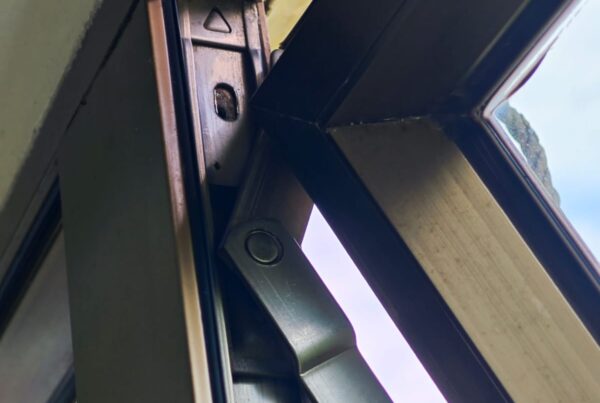
- Smooth operation and component integrity: Test whether operation is smooth and check for deformation, rust, or breakage of hinges and hardware.
- Air-conditioner installation compliance: The movable window sash must be removed before installing the unit; it must not be left suspended or jammed long-term.
- Surface anti-rust paint condition: Observe peeling paint, exposed metal, or deep corrosion to assess structural strength.
- Availability and substitutability of damaged parts: Evaluate whether replacement parts are still available in the market. If core parts are obsolete with no substitutes, the window cannot pass inspection.
During inspection, the Qualified Person should make detailed records and take photos of problematic windows. Owners should cooperate in advance to allow access.
Step 2: Assessment of Repair or Replacement Needs
After inspection, the Qualified Person will list the windows requiring repair or replacement and recommended methods based on objective assessment. This list is an important basis for owners to judge whether the costs are reasonable. If a contractor recommends full replacement without providing a detailed inspection report, this warrants questioning and further explanation.
Step 3: Repair or Replacement Works
After confirming the scope, arrange the works:
- Repair: Replace damaged parts, apply lubricant, touch up anti-rust paint, etc.
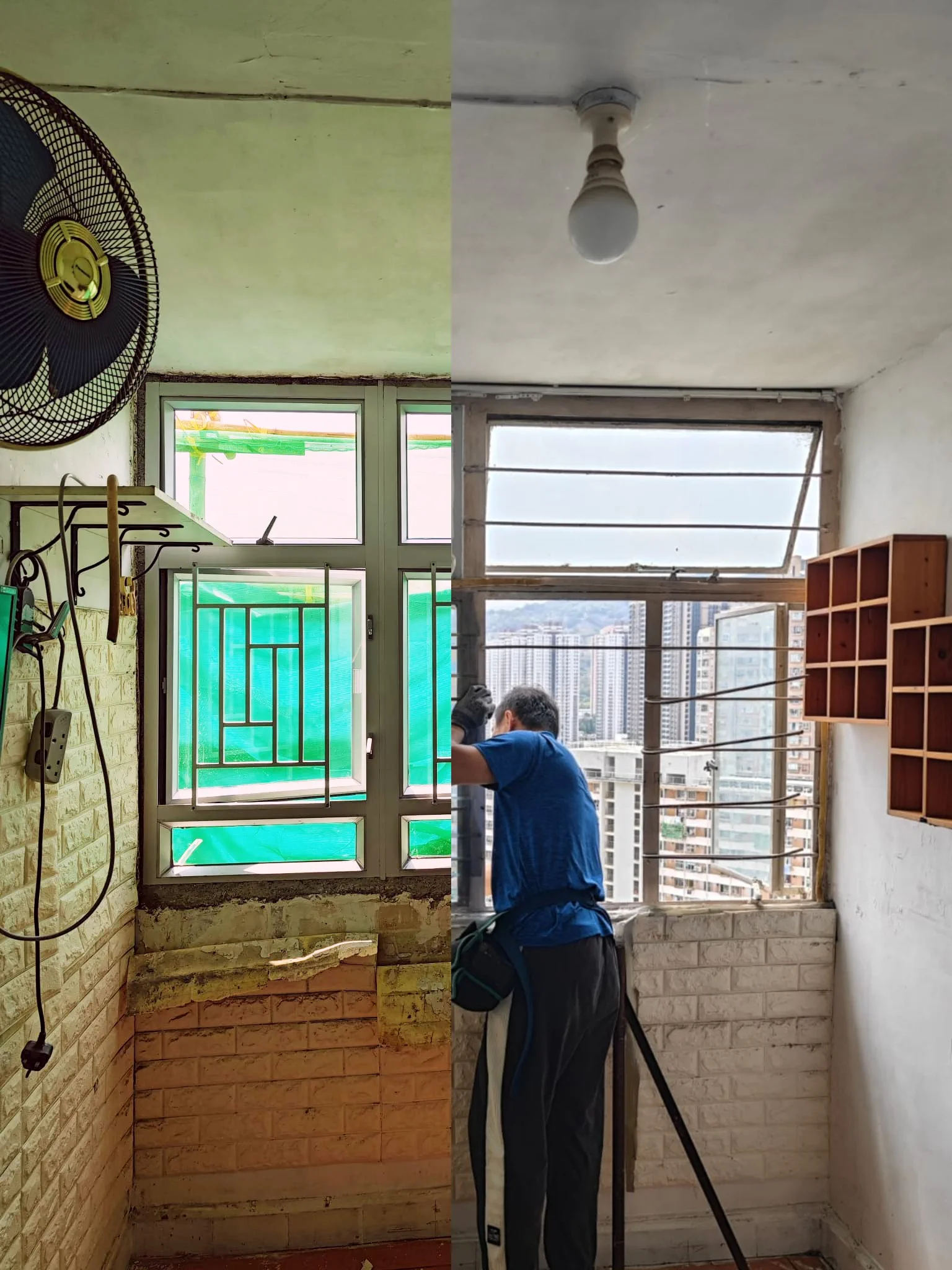
- Replacement (iron to aluminum windows or old aluminum window replacement): On-site measurement and assessment of scaffolding needs and safety risks; strictly follow official original drawings to prevent unauthorised alterations; complete proper declarations and purchase adequate insurance (up to HK$20 million third-party liability); safe removal of old windows, installation of new aluminum windows, and deep waterproofing works (using high-quality hardware such as 304 stainless steel and professional waterproof membranes). Works for a typical residential unit are usually completed within 4 to 5 working days with minimal disruption — owners do not need to move out.
After completion, the Qualified Person will re-confirm quality compliance.
Step 4: Submission of Confirmation Documents
A proper company will generate compliant reports or confirmation documents and submit them on behalf of the owner. Owners should request copies and acknowledgement of receipt as proof of fulfilling statutory obligations.
Costs and Common Charging Pitfalls
Charges in Hong Kong’s window inspection and replacement market vary greatly depending on unit size, number of windows, and works required. Inspection and report fees alone are relatively low, but replacement costs rise significantly.
Owners should be most alert to the “replace everything in one go” recommendation. In practice, the proportion of windows truly requiring full replacement is usually much lower than claimed by contractors. Repairing parts or localised treatment is often sufficient to resolve most safety issues.
Methods to Identify Unreasonable Charges
First, any Qualified Person should provide a written assessment report clearly stating the specific issues and recommended solutions for each window. If a contractor only claims verbally that “all have problems” without documentary support, switch service provider immediately. Second, before works commence, request itemised quotations with unit prices and quantities. Refusal to provide itemised quotes is a sign of non-transparent charging.
EJW explicitly commits to carrying out only works confirmed as necessary through objective inspection. Quotations are transparent with fixed prices, fully inclusive of removal, clearance, and disposal costs, and come with up to 5 years of extended free maintenance. This principle is not common in the industry and should be a key evaluation criterion when comparing service providers.
Tip: If you have paid for inspection but have doubts about the recommendations, you have the right to seek a second opinion from another Qualified Person before deciding on the works. This additional cost is often far lower than the loss from unnecessary replacement.
Comparison of Different Approaches
After receiving the notice, owners actually face three options. The comparison table below clearly lists the advantages, disadvantages, and suitable situations of each approach to help you make the most practical decision.
| Approach | Main Advantages | Main Risks and Limitations |
|---|---|---|
| Engage licensed professional window inspection and replacement company (e.g. EJW) | Clear process, compliant reports, transparent pricing, only necessary costs, 5-year warranty | Requires proactive comparison to avoid companies that exaggerate problems |
| Unified arrangement through Housing Department or management office | Saves individual owners the hassle of contacting providers; costs may be subsidised or covered by funds | Arrangements may not be the fastest; lower transparency for owners |
| Ignore or delay / direct full replacement without inspection | No immediate action required in the short term | Facing fines, rectification orders, or safety liability risks; future remedial work will be more time-consuming and costly |
Frequently Asked Questions
How much time do I have to complete after receiving the iron window inspection notice?
The Housing Department generally specifies a clear deadline in the notice. Owners should engage a Qualified Person as soon as possible after receipt, as arranging inspection, completing works, and submitting documents takes time. Large-scale replacement projects may require several weeks for the entire process.
Who is responsible for windows in public housing units?
According to relevant ordinances, inspection and compliance responsibility lies with the owner or tenant. Even if the unit is rented or is public housing, the owner/tenant must ensure the windows pass inspection and arrange access for personnel. Relevant parties should be notified in advance, and cooperation clauses may be added to tenancy agreements if necessary.
What if replacement is needed after inspection but I lack funds?
The Housing Department offers related subsidy or low-interest loan schemes. Eligible owners may apply. Owners should proactively enquire with the Housing Department about eligibility instead of delaying statutory obligations due to funding issues.
How long should inspection reports or project documents be kept?
Relevant departments will keep records after receipt, but owners should also retain copies. It is recommended to keep them at least until the next inspection cycle is completed. These documents serve as important legal proof in any future disputes related to window safety.
What are the most common types of iron window problems?
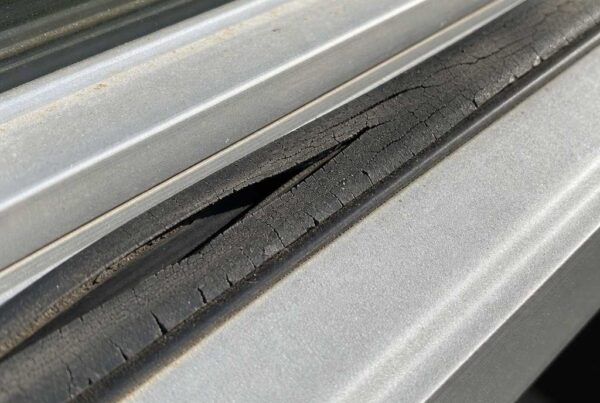
Based on practical experience, the most common issues with old-style public housing iron windows include: oxidation and corrosion of aluminum or iron window frames, aging and loosening of hinges, hardening and cracking of sealant strips causing leakage, non-compliant air-conditioner installation leading to suspended sashes, and obsolete core hardware parts with no available substitutes. Most of these problems can be resolved through localised repair or compliant replacement.
Who is responsible for scaffolding, insurance, and declaration for aluminum window replacement works?
Reputable companies will purchase adequate insurance for each project (including up to HK$20 million third-party liability) and complete proper declaration procedures with the estate management office. Owners do not need to handle this themselves; project personnel will follow up throughout.
Does the aluminum window replacement quotation include removal and disposal of old windows?
Professional company quotations are fully inclusive, transparent fixed-price packages covering safe dismantling, waste transportation and disposal, and basic post-completion cleaning. There are absolutely no hidden “rubbish removal fees” or “waste disposal fees”.
What else needs to be done after inspection completion?
After inspection and works are completed, the Qualified Person will submit confirmation documents. Owners should request copies and acknowledgement of receipt to confirm that statutory procedures have been completed and filed. Thereafter, owners should continue regular self-inspection of window conditions and contact professionals promptly if abnormalities are found, without waiting for the next notice.
References
- Buildings Department official website – statutory requirements for Mandatory Window Inspection Scheme, list of qualified persons, and related forms
- Hong Kong e-Legislation – full legal text of Buildings Ordinance Cap. 123
- Hong Kong Housing Authority – public housing window inspection arrangements, iron window safety guidelines, and owner support services
- Urban Renewal Authority – old building repair subsidy schemes and owner support services
- EJW official page – details on public housing iron window inspection and aluminum window replacement services