From June to September each year, Hong Kong officially enters the typhoon season. According to statistics from the Hong Kong Observatory, the territory is affected by an average of six tropical cyclones annually, many of which are intense typhoons with Signal No. 8 or higher. When strong winds strike, incidents of aluminium windows loosening, glass shattering, or even entire window frames falling occur across various districts. The root cause is almost never the typhoon itself, but rather long-term neglected maintenance of aluminium windows exposing structural weaknesses under wind pressure. This article provides Hong Kong property owners with a practical typhoon aluminium window safety self-assessment checklist to help identify risks early before the typhoon season and safeguard home safety.
Table of Contents
- Quick Key Insights
- Why Pre-Typhoon Aluminium Window Safety Checks Cannot Be Delayed
- 10 Key Self-Assessment Points – Detailed Explanation
- Risk Comparison of Three Common Aluminium Window Issues
- Limitations of Self-Assessment and Statutory Mandatory Window Inspection Requirements
- Emergency Reinforcement Measures Before Typhoon
- Frequently Asked Questions
- References
Quick Key Insights
| Key Insight | Explanation |
|---|---|
| Aluminium window ageing is the greatest risk factor | Windows over 10 years old experience significantly increased oxidation, corrosion, and component wear, substantially raising the risk of detachment during typhoons. |
| Loose screws are the most easily overlooked hazard | Once window frame fixing screws loosen, the entire window may shift or even fall under strong winds – a problem owners often fail to notice in daily use. |
| Sealant ageing directly affects waterproofing and structural stability | Cracked or detached sealant not only causes water leakage but also weakens the support between the window frame and the wall. |
| Self-inspection has limitations; professional assessment is essential | Owners cannot visually assess internal aluminium strength or wall anchorage conditions. Only a statutory mandatory window inspection report carries legal validity. |
| Reinforcement after a typhoon signal is too late | Complete inspections and repairs at least two weeks before the typhoon season to ensure quality and avoid material shortages during peak demand. |
| Unnecessary repairs are simply a waste of money | Qualified technicians should recommend repairs only for actual needs. Owners have the right to request a detailed written report listing all issues. |
| Mandatory window inspection applies to buildings 10 years or older | Under the Buildings Ordinance (Cap. 123), the Buildings Department may issue mandatory window inspection orders. Owners must appoint qualified persons to comply. |
Why Pre-Typhoon Aluminium Window Safety Checks Cannot Be Delayed
Many owners think: “My windows are working fine – why spend money on inspection?” This mindset is particularly dangerous before the typhoon season. Structural problems in aluminium windows develop gradually and are hardly noticeable in daily use. Only when a typhoon delivers repeated wind pressure of several hundred pascals in a short time do hidden weaknesses suddenly manifest.
According to past incident records from the Hong Kong Fire Services Department and the Buildings Department, aluminium window failures are among the most common types of external building facade falling-object accidents during typhoons. This is especially true in older private residential buildings, where some aluminium windows installed over 20 to 30 years ago use outdated alloy specifications and fixing methods that fall far short of current standards. The best time for aluminium window safety inspection is not on the day a typhoon signal is hoisted, but four to six weeks before the typhoon season begins.
In practice, appointment demand for professional window inspection companies surges from May to early June, with some firms having waiting times of three to four weeks. Owners who wait until late June may be unable to complete formal repairs before the first major typhoon arrives. Acting early is not only a safety issue but also basic time management.
“Aluminium window accidents are never isolated incidents – they are the inevitable result of long-term neglected maintenance. Strong winds are merely the final straw.” – Observation from a veteran Hong Kong aluminium window engineer.
More importantly, owners also bear legal responsibility. If a window loosens or shatters and causes injury or property damage to third parties, owners may face civil claims or even criminal liability. Pre-typhoon aluminium window safety inspection is both protection for your family and a responsible attitude towards neighbours and the public.
10 Key Self-Assessment Points – Detailed Explanation
Point 1: Visually Check for Obvious Deformation or Bending of the Window Frame
Stand indoors and observe whether the four sides of the window frame remain straight from both front and side angles. Under prolonged stress or improper installation, aluminium alloy frames may develop slight bending or twisting. Even a few millimetres of deformation indicates compromised structural integrity, rendering the frame unable to withstand typhoon wind pressure effectively.
Inspection method: Use a straight ruler or plumb line stretched from one end of the frame to the other to check for any noticeable curvature. If any irregular shape is found, immediately contact a qualified professional for assessment. Do not attempt to correct it yourself.
Point 2: Check Whether Window Sashes Open and Close Smoothly
If window sashes stick, show abnormal resistance, or require excessive force to operate, this usually indicates worn hinges, deformed tracks, or overall frame displacement. These issues will worsen rapidly under typhoon winds, preventing the sash from locking securely and potentially allowing it to be forced open by strong gusts.
Owners should test every sash individually, paying special attention to any unusual noises from the top hinges. The first step in pre-typhoon preparation is to ensure all locking mechanisms function properly and that sashes close without gaps.
Point 3: Inspect Window Frame Fixing Screws and Anchorage Points
Window frames are typically secured at the four corners and mid-points with fixing screws anchored to the wall or sill. These screws are prone to loosening due to temperature fluctuations and vibration over time. Owners can gently touch the screws to feel for any noticeable movement. Rusted screw heads often indicate corrosion of the screw shank, greatly reducing holding power.
Special attention should be paid to older buildings where aluminium windows are fixed with expansion bolts into concrete walls. If the concrete has cracks or spalling, anchorage strength may have been completely lost. Such conditions are difficult to judge by appearance alone and require professional instruments for detection.
Point 4: Visually Inspect Sealant Strips and Joint Conditions
The silicone or sealant between the window frame and wall is a critical component for preventing water ingress and enhancing frame stability. Owners should check for cracking, yellowing, detachment, or bubbling. In Hong Kong’s hot and humid environment, silicone typically lasts only five to eight years; beyond this, waterproofing performance drops to near zero.
If sealant has partially detached, owners are advised not to simply apply new silicone over the old. Without complete removal of the old sealant, bonding between new and old layers will be poor and may detach entirely during a typhoon. Proper procedure requires thorough removal of old sealant followed by professional reapplication using appropriate tools and techniques.
Point 5: Check Glass for Cracks or Chipped Edges
Even tiny glass cracks can rapidly propagate and cause complete shattering under sudden typhoon wind pressure. Owners should carefully inspect all four corners and edges of each pane under good lighting – these are stress concentration points most prone to micro-cracks.
Also check whether glass glazing strips still securely hold the glass in the frame grooves. Loose strips allow the glass to rattle, accelerating crack formation. Window safety concerns not only the frame but also the integrity of the glass itself.
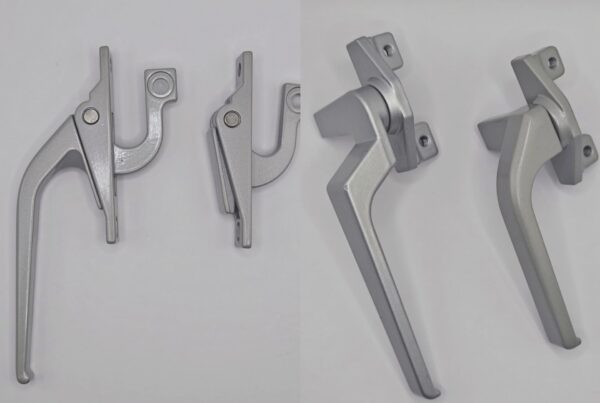
Point 6: Test All Window Locks and Latches
Window locks serve as the final defence against strong winds forcing sashes open during typhoons. Owners should test every lock to ensure the mechanism engages fully without looseness or free spinning. Some older push-type latches wear out over time and may appear locked but can be pushed open with minimal force.
Any failed or difficult-to-operate locks should be replaced before the typhoon season. This is one of the lowest-cost yet most effective safety improvements – do not delay.
Point 7: Check Rollers and Window Tracks
Sliding aluminium windows rely on rollers moving within tracks. Worn rollers or failed bearings prevent the sash from remaining stable under wind pressure. With the sash closed, apply moderate outward hand pressure and check for excessive inward/outward movement. If movement exceeds 5mm, the rollers or tracks require repair.
Point 8: Observe Perimeter Walls for Water Staining Around Window Frames
Water marks, mould, or paint peeling around window frames are direct evidence of sealant failure. Owners should inspect both interior and exterior sides within 24 hours after rainfall, focusing on areas below the sill and at wall corners. Typhoon-driven wind and rain are far more severe than normal rainfall; existing leakage will worsen dramatically.
Water leakage is not merely a renovation issue – prolonged moisture ingress corrodes fixing screws and anchorage points, ultimately compromising the entire window frame’s structural safety.
Point 9: Check for Air Leakage from Window Gaps
On a calm day, place your hand near the four sides of the frame to feel for noticeable air inflow. Gaps between frame and wall or sash and frame allow strong typhoon winds to rush in, increasing pressure differentials that may force sashes open or push frames inward.
This test is particularly useful for high-floor units, where higher wind speeds create more pronounced pressure effects. This simple tactile check in pre-typhoon preparation often reveals gaps invisible to the naked eye.
Point 10: Verify Window Installation Year and Last Maintenance Records
Owners should review renovation records or consult the owners’ corporation for the building’s aluminium window replacement year. In Hong Kong, many private residential windows are over 15–20 years old, far exceeding their designed service life. Even if they appear intact, aged windows suffer significant degradation in material strength, sealing performance, and mechanical components.
If the installation year cannot be confirmed but the aluminium surface shows obvious white oxidation spots, powdering, or dull colour, it is reasonable to assume the windows are over ten years old. In such cases, arrange a formal assessment by EJW qualified window inspection personnel rather than relying solely on self-judgement.
Risk Comparison of Three Common Aluminium Window Issues
In practice, owners’ perception of the severity of different aluminium window problems often differs significantly from actual risk levels. The comparison table below helps owners quickly identify which issues can be deferred and which must be addressed before the typhoon season.
| Issue Type | Typhoon Risk Level | Recommended Priority |
|---|---|---|
| Loose window frame fixing screws or failed anchorage | Extremely High: May cause entire window frame to detach, endangering lives | Immediate action – do not delay into typhoon season |
| Ageing and detachment of sealant | Medium to High: Causes leakage and reduced frame stability, worsening sharply under typhoon conditions | Replace before typhoon season |
| Failed window locks or poor sash closure | High: Strong winds can force sashes open, causing property damage and personal injury | Repair before typhoon season |
| Worn rollers causing sash movement | Medium: Reduces wind resistance and accelerates wear on other components | Replace before typhoon season; secondary priority if scheduling is difficult |
| Minor glass cracks | High: Cracks propagate rapidly under typhoon pressure, with high risk of shattering and injury | Replace immediately – do not wait |
| Surface oxidation white spots on aluminium | Low to Medium: Primarily aesthetic, but severe oxidation indicates reduced material strength | Arrange professional assessment to determine if full window replacement is needed |
Tip: If self-assessment reveals both loose screws and ageing sealant, do not repair them separately. The issues are often interrelated. Request technicians to assess the overall condition holistically to avoid solving one problem only for another to surface during a typhoon.
Limitations of Self-Assessment and Statutory Mandatory Window Inspection Requirements
It must be clearly stated that owner self-assessment can only cover visible surface issues and cannot replace professional aluminium window safety inspection. The following risks are difficult for owners to detect regardless of how carefully they inspect:
First, the actual thickness and strength of internal aluminium within the frame. Aluminium alloys can suffer intergranular corrosion in alkaline environments (e.g., from wall lime), appearing intact externally while internally reduced to powder. This requires qualified engineers using instruments or sampling.
Second, the actual load-bearing capacity of wall anchorage points. Concrete ageing, rebar corrosion, or internal voids greatly reduce screw pull-out resistance, yet these are invisible externally. Only Buildings Department-recognised qualified window inspectors can issue legally valid assessment reports.
Under the Buildings Ordinance (Cap. 123), the Buildings Department’s Mandatory Window Inspection Scheme requires owners of buildings 10 years or older to appoint qualified persons for regular window safety inspection and repair. Non-compliance may result in prosecution with fines up to HK$25,000 plus daily penalties.
EJW’s services are designed precisely to meet these statutory requirements. Our Buildings Department-recognised qualified persons conduct on-site surveys, issue detailed computer-generated inspection reports, and recommend repairs only where actually needed. This “necessary repairs only” principle is the most important criterion when choosing a professional window inspection company.
Tip: Before accepting any inspection report, owners should request three items: the qualified person’s Buildings Department registration number, a written report detailing each issue, and an itemised quotation for repair costs. Any company unable to provide these should be approached with caution.
Emergency Reinforcement Measures Before Typhoon
If a typhoon signal has already been hoisted and formal repairs cannot be completed in time, the following emergency measures can help reduce immediate risks. However, these are only temporary and cannot replace proper repairs.
First, close and lock all window sashes. This most basic step is often overlooked, especially by high-floor residents who habitually leave some windows open for ventilation. During a typhoon, all sashes – including small bathroom and kitchen windows – must be fully closed and locked.
Second, apply waterproof tape temporarily along the joints between window frames and walls. High-quality butyl rubber tape offers better adhesion and can serve as a short-term substitute for failed sealant. Ordinary transparent or paper tape will fail quickly in rain.
Third, remove all potted plants, decorations, and loose items from window sills. Typhoon winds can turn these into dangerous projectiles that strike the glass. This zero-cost step effectively reduces additional impact on windows.
Finally, apply thick tape to glass surfaces in an “X” or “#” pattern indoors. This cannot prevent shattering but helps contain fragments and reduce injury risk if breakage occurs.
Frequently Asked Questions
What tools are needed for owners to perform aluminium window safety checks themselves?
Owner self-assessment requires no specialised tools. A straight ruler or plumb line for checking frame straightness, a torch for illuminating gaps and screws, and your hands for tactile air leakage tests are sufficient. Most households already have these. The most important factors are patience and a systematic approach: inspect every sash and component thoroughly rather than a quick glance.
My aluminium windows were replaced less than five years ago during renovation. Do I still need to check them before a typhoon?
Yes, but the focus differs. Newer windows generally have better structural integrity, but installation quality is the key variable. In Hong Kong, some renovation projects may not fully meet Buildings Department standards. Owners should focus on whether fixing screws are sufficient in number, sealant application is complete, and sashes open and close evenly. If in doubt, even windows under five years old warrant a formal assessment.
After a typhoon, if aluminium window damage is discovered, should it be reported or repaired immediately?
Depending on severity. If the frame has shifted or tilted, indicating possible anchorage failure, immediately secure the window temporarily and contact qualified personnel within 24–48 hours. If only glass is broken but the frame is intact, clear debris and temporarily board up the opening before arranging repairs. Record all typhoon-related damage and report to your insurer.
What is the difference between the Mandatory Window Inspection Scheme and owner self-checks?
The Mandatory Window Inspection Scheme requires inspection by Buildings Department-recognised qualified persons, with reports carrying legal validity for compliance with inspection orders. Owner self-checks have no legal standing and serve only as personal risk assessment. The two cannot replace each other. Self-assessment helps identify obvious issues early and prioritise high-risk items before formal inspection.
Will fees for pre-typhoon window inspection differ from normal season inspections?
During peak pre-typhoon periods (May to July), some companies may apply minor scheduling premiums due to high demand, but reputable qualified firms generally do not raise prices significantly. The real issue is time. Booking at the end of June may push appointments to August, well into the typhoon season. It is advisable to book in April or May to complete formal inspections and all repairs before the peak period.
References
- Hong Kong Buildings Department official website – Mandatory Window Inspection Scheme regulations and list of registered qualified persons
- Hong Kong Observatory – typhoon season statistics and tropical cyclone historical records
- Hong Kong Housing Authority – public housing window safety maintenance guidelines and notices
- Hong Kong Food and Environmental Hygiene Department – building external wall safety related regulations
- Hong Kong Civil Engineering and Development Department – technical references on building material weather resistance and structural safety